Located along the Cambridge–Somerville line, this compact urban landscape transforms a narrow, overgrown lot into a cohesive extension of the home. Through a careful balance of outdoor living, culinary use, privacy, and planting design, the project creates a layered environment that supports both everyday routines and entertaining.
a narrow urban lot, thoughtfully transformed
Cambridge, MA | Set within a dense urban neighborhood, this project called for a careful balance of function, privacy, and spatial organization. The long, narrow lot is restructured into a sequence of connected outdoor spaces, where layered planting and purposeful material transitions create depth, order, and a stronger sense of enclosure.
Designed for homeowners who enjoy cooking and entertaining, the landscape extends the living space beyond the house in a way that feels both practical and refined. Areas for preparation, dining, and gathering are carefully integrated, allowing the property to function as a cohesive outdoor environment rather than a series of separate moments.
Designed for homeowners who enjoy cooking and entertaining, the landscape extends the living space beyond the house in a way that feels both practical and refined. Areas for preparation, dining, and gathering are carefully integrated, allowing the property to function as a cohesive outdoor environment rather than a series of separate moments.
designing within urban constraints
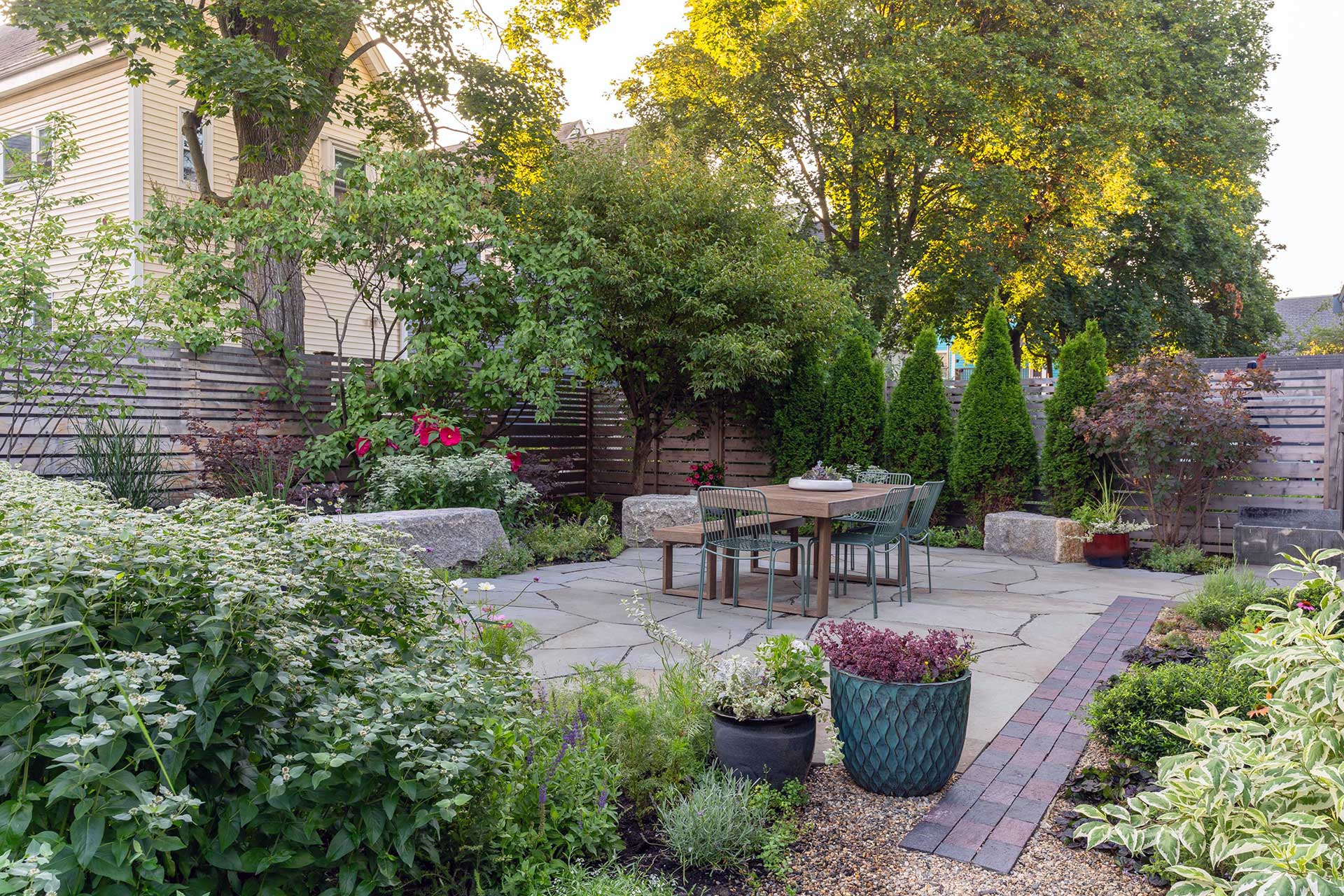
Long, narrow urban lots benefit from a deliberate approach to layout and sequencing. Rather than treating the property as a single open yard, the design establishes a progression from entry to rear garden, allowing each space to serve a distinct purpose while remaining visually connected.
Changes in material, planting density, and spatial definition are used to create rhythm and structure throughout the site. This layered approach helps the landscape feel more expansive, while also improving privacy and making the compact footprint more functional for daily use.
Changes in material, planting density, and spatial definition are used to create rhythm and structure throughout the site. This layered approach helps the landscape feel more expansive, while also improving privacy and making the compact footprint more functional for daily use.
extending the kitchen into the landscape
A central goal of the project was to strengthen the relationship between the interior kitchen and the outdoor living spaces. A dedicated preparation area extends that connection, creating a functional workspace that supports both everyday cooking and entertaining. Positioned just beyond the house, this zone helps the landscape feel more closely tied to daily routines, allowing movement between inside and out to feel natural and efficient. In a compact urban property, that continuity is especially important, helping each square foot work harder without feeling crowded.
Custom wood cabinetry adds warmth, while weathering steel planters introduce durable structure and integrate edible herbs directly into the design. The prep area is further defined by cast concrete and cedar fencing, giving it a clear sense of purpose while still keeping it visually connected to the adjoining dining and gathering spaces. Together, these elements allow culinary use, planting, and outdoor living to function as one cohesive environment. Rather than treating the kitchen garden and entertaining areas as separate moments, the design brings them together in a way that makes the landscape feel like an intentional continuation of life indoors.
The result is a compact outdoor workspace that feels both practical and beautifully integrated into the overall composition. It also gives the homeowners a more inviting way to cook, gather, and enjoy the garden as part of everyday life.
Custom wood cabinetry adds warmth, while weathering steel planters introduce durable structure and integrate edible herbs directly into the design. The prep area is further defined by cast concrete and cedar fencing, giving it a clear sense of purpose while still keeping it visually connected to the adjoining dining and gathering spaces. Together, these elements allow culinary use, planting, and outdoor living to function as one cohesive environment. Rather than treating the kitchen garden and entertaining areas as separate moments, the design brings them together in a way that makes the landscape feel like an intentional continuation of life indoors.
The result is a compact outdoor workspace that feels both practical and beautifully integrated into the overall composition. It also gives the homeowners a more inviting way to cook, gather, and enjoy the garden as part of everyday life.
see the transformation

project details
Location: Cambridge, MA (02141)
Features: planters, permeable driveway, dining terrace, outdoor prep station, edible plantings
Project Type: compact urban outdoor living
Services: landscape design, construction, seasonal planting, maintenance
Landscape Design: a Blade of Grass
Features: planters, permeable driveway, dining terrace, outdoor prep station, edible plantings
Project Type: compact urban outdoor living
Services: landscape design, construction, seasonal planting, maintenance
Landscape Design: a Blade of Grass
tour this property in Cambridge, MA
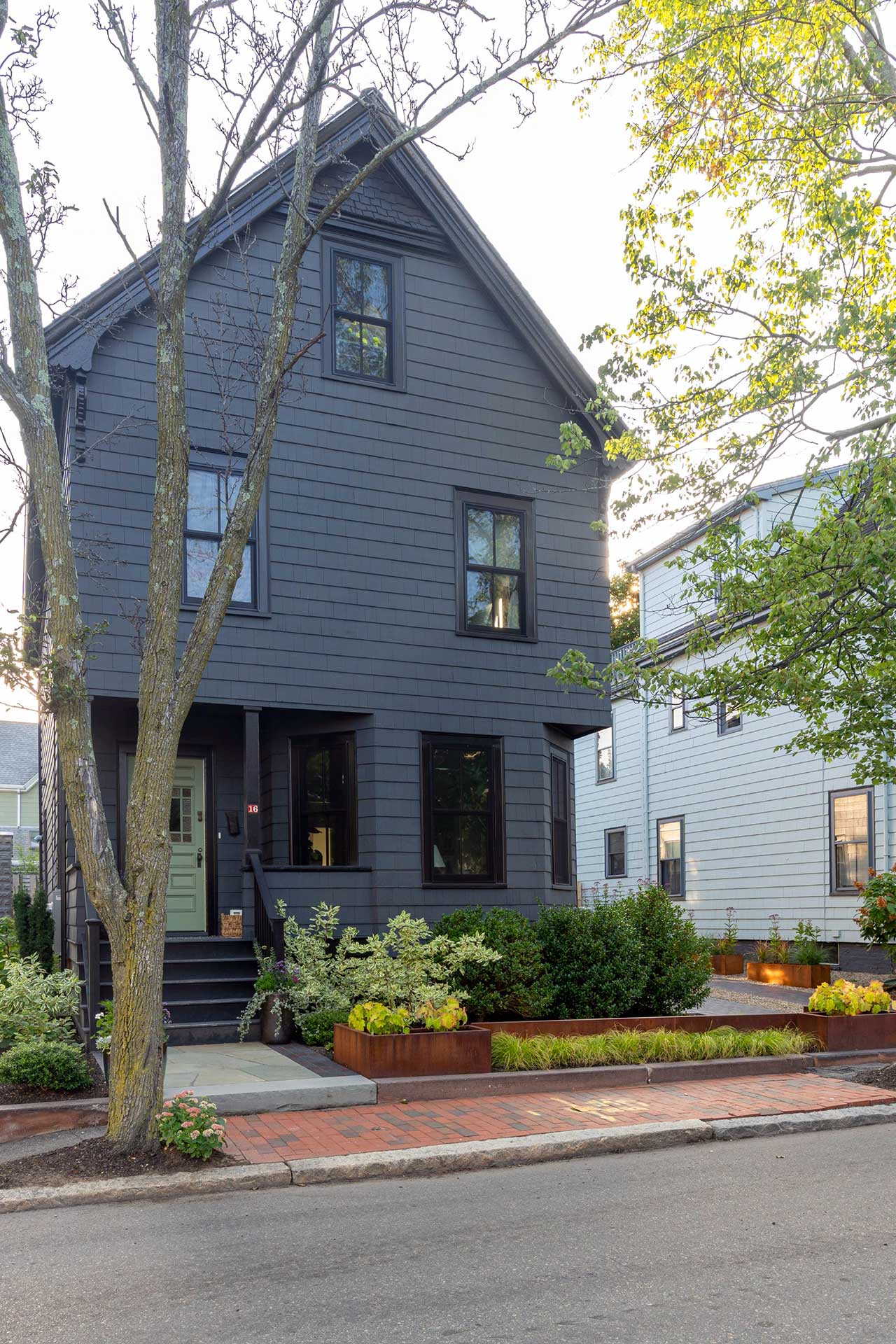
Weathering steel planters define the urban entry sequence, introducing structured planting and softening the transition between sidewalk and home. Photo credit: Dan Kaplan
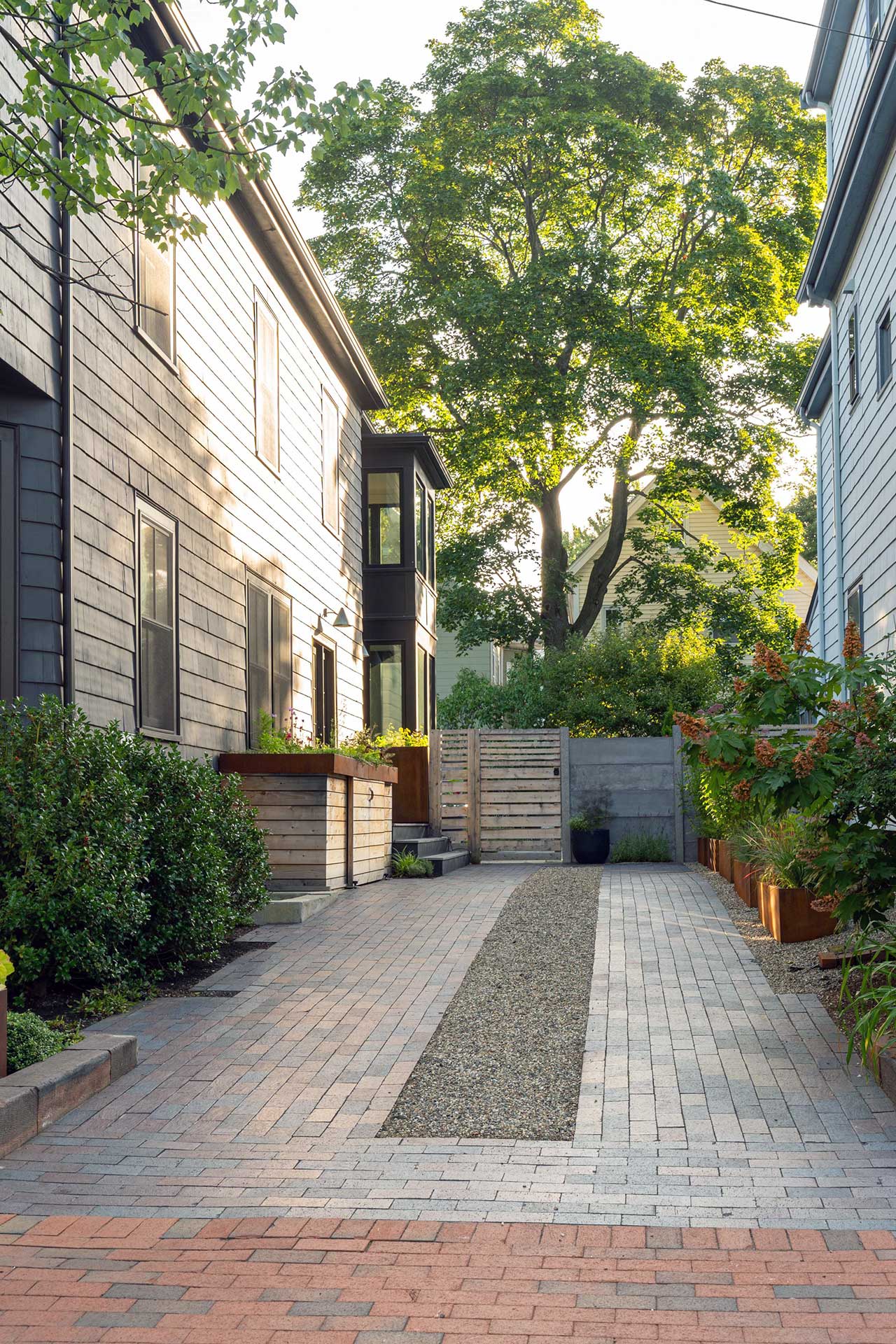
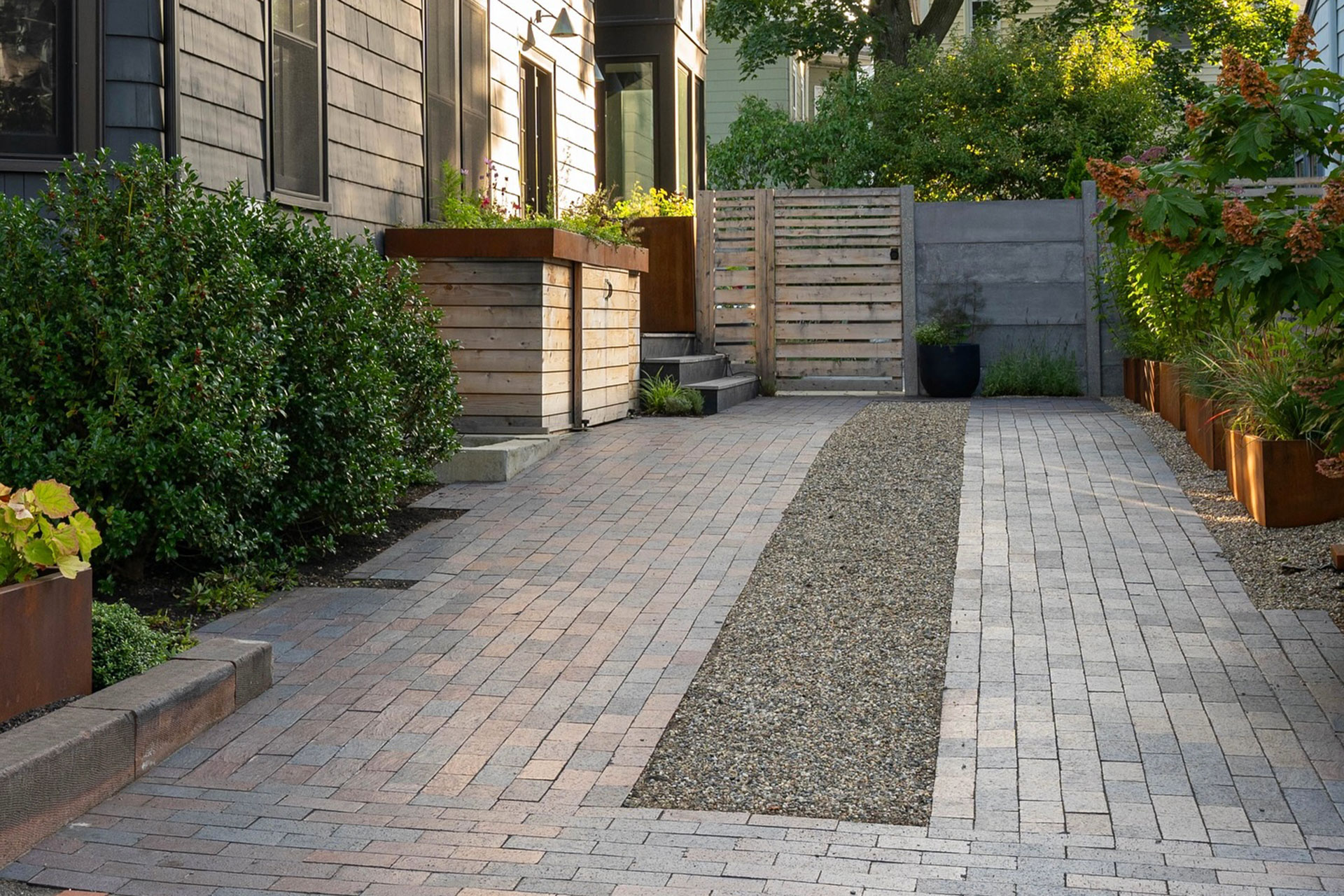
Permeable pavers with a central gravel band improve drainage while reinforcing the linear geometry of this narrow urban driveway, complemented by layered privacy screening. Photo credit: Dan Kaplan
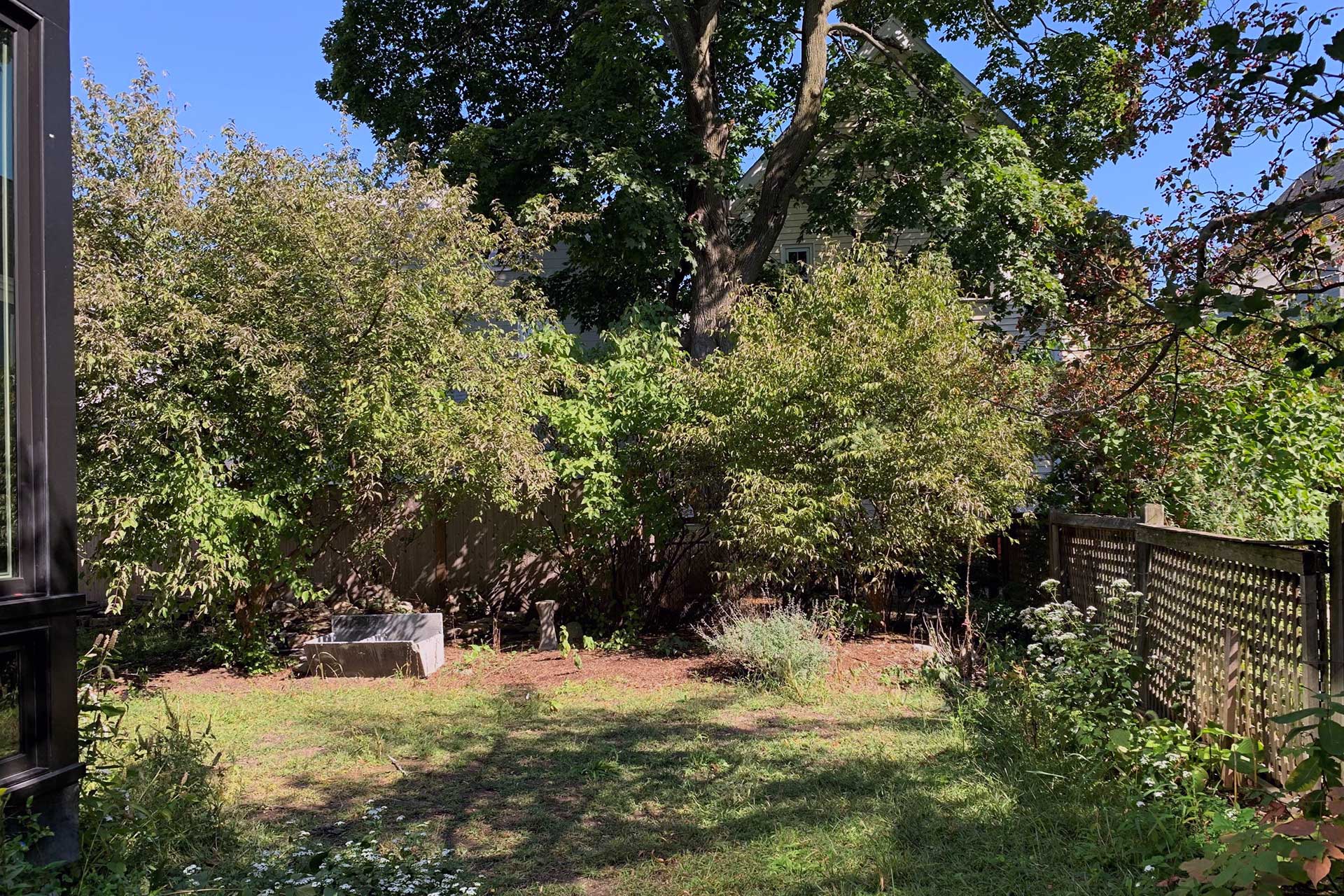
The existing backyard was dominated by invasive growth and unmanaged shade, limiting usability and obscuring the potential of the space.
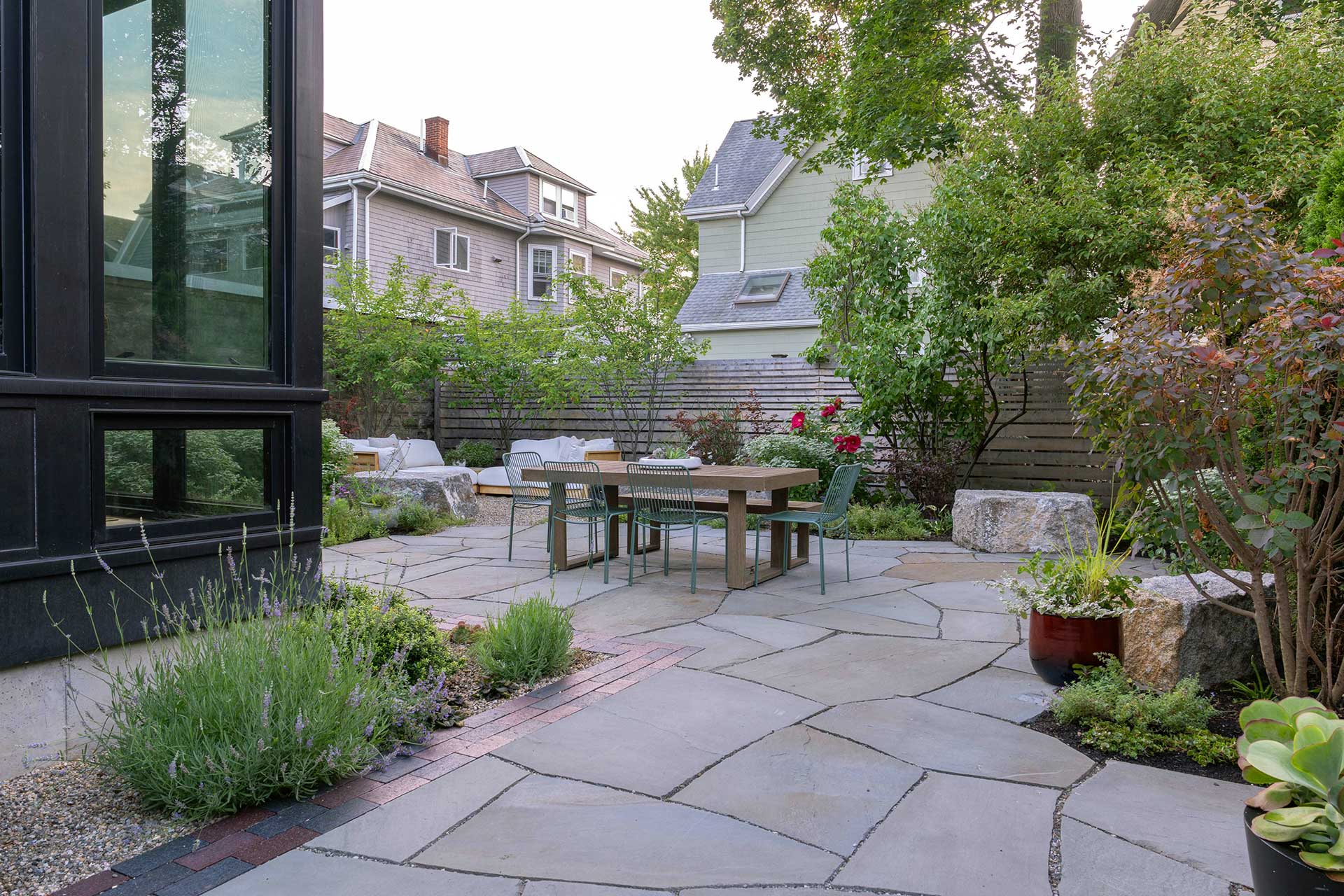
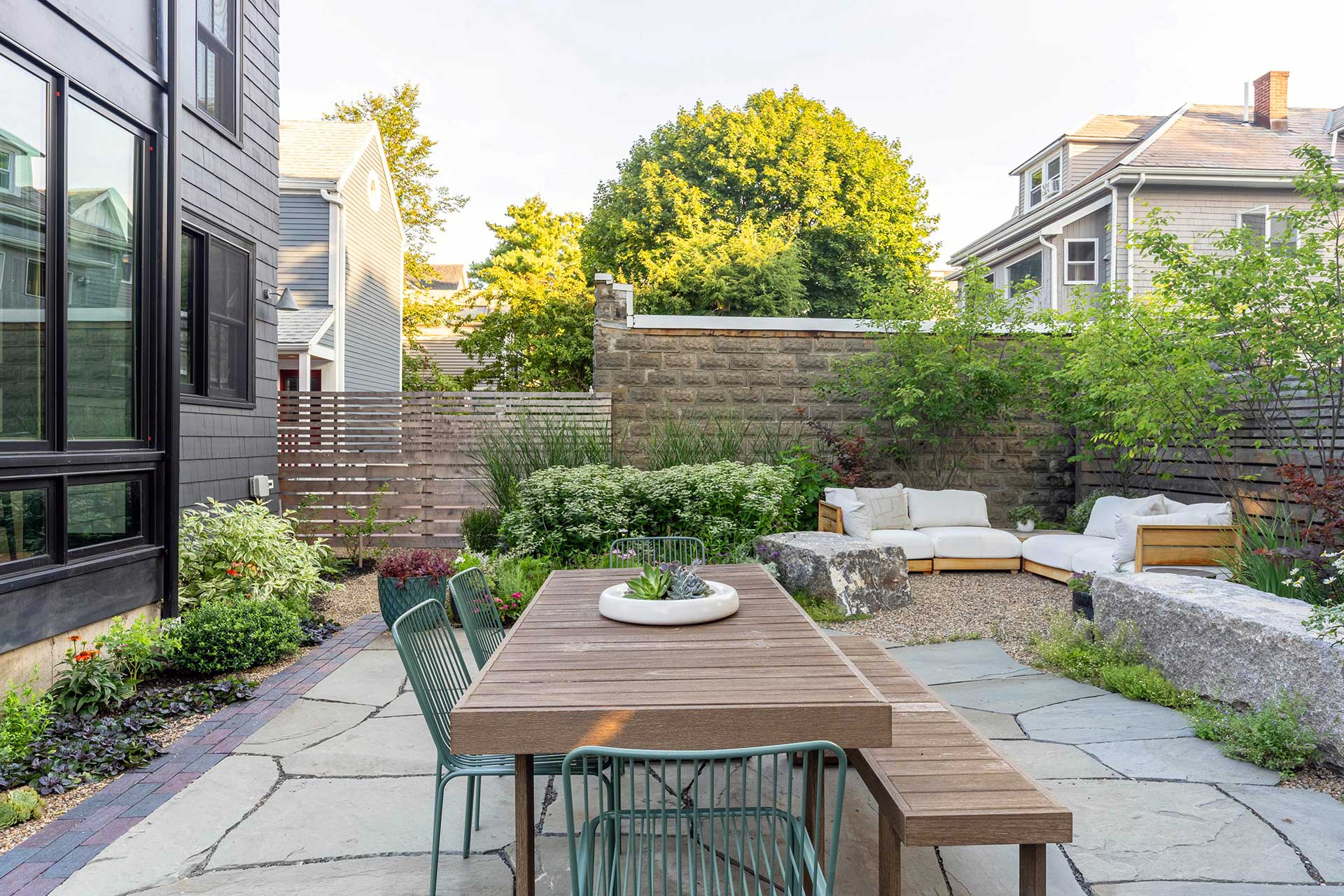
Irregular bluestone paving creates an organic foundation for outdoor dining, while layered planting establishes depth and enclosure within the compact footprint. Photo credit: Dan Kaplan
The dining terrace is positioned to connect directly to the home, with bluestone paving and layered plantings creating a cohesive and usable outdoor room. Photo credit: Dan Kaplan
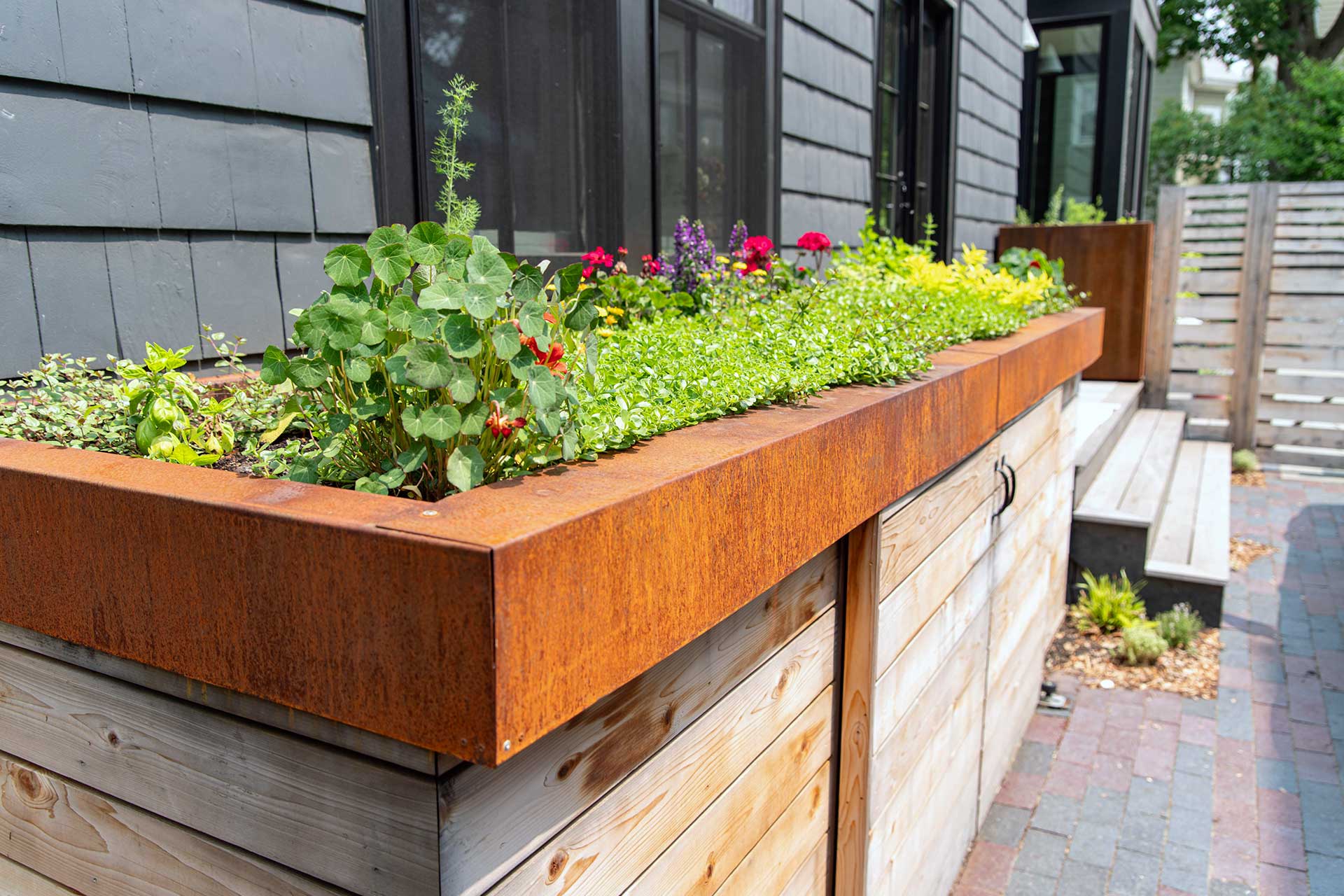
Weathering steel planters paired with custom wood cabinetry create a functional outdoor kitchen zone, with edible plantings positioned for easy access. Photo credit: Dan Kaplan
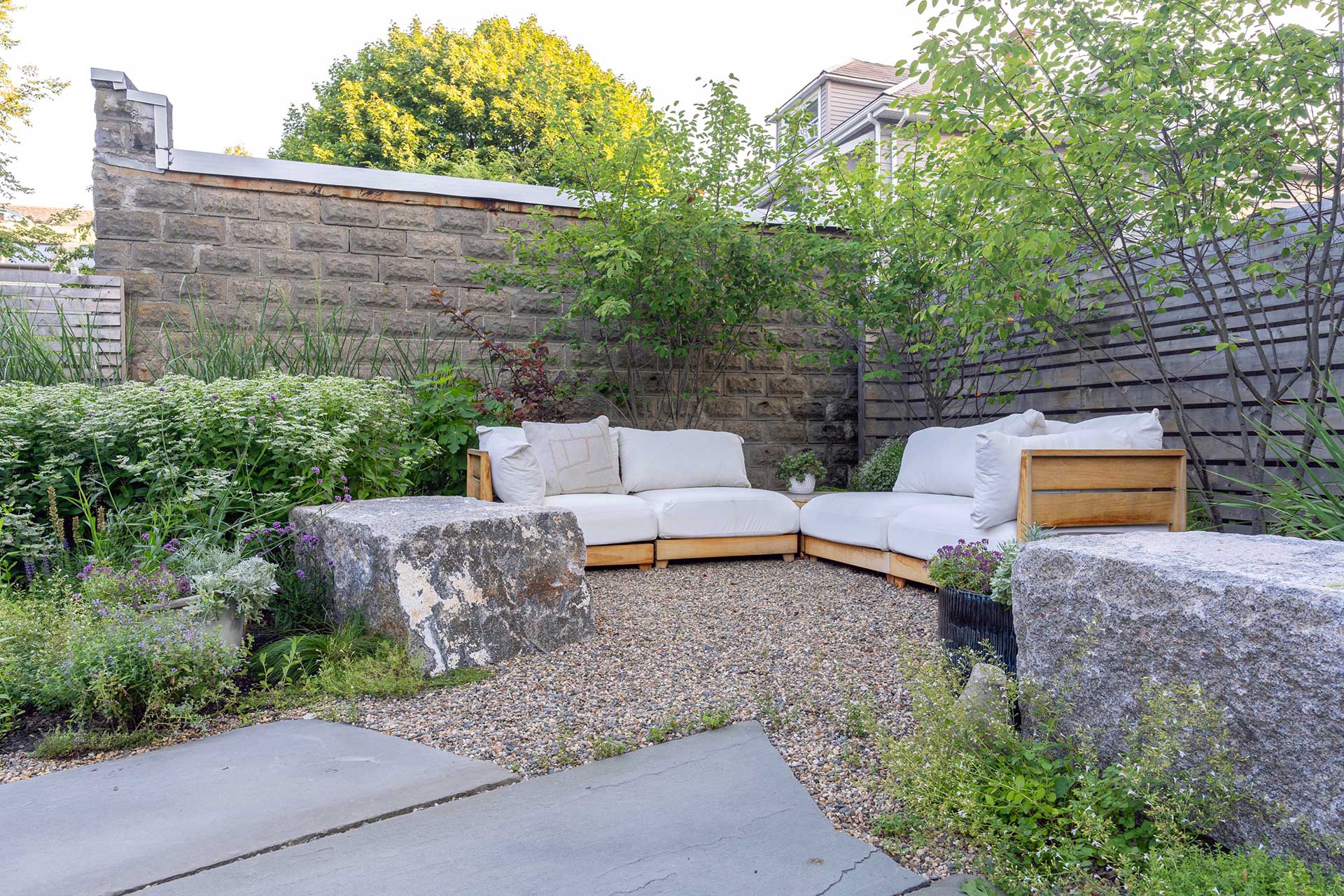
A gravel seating area framed by reclaimed stone blocks offers a more intimate retreat, with native plantings providing texture and seasonal variation. Photo credit: Dan Kaplan
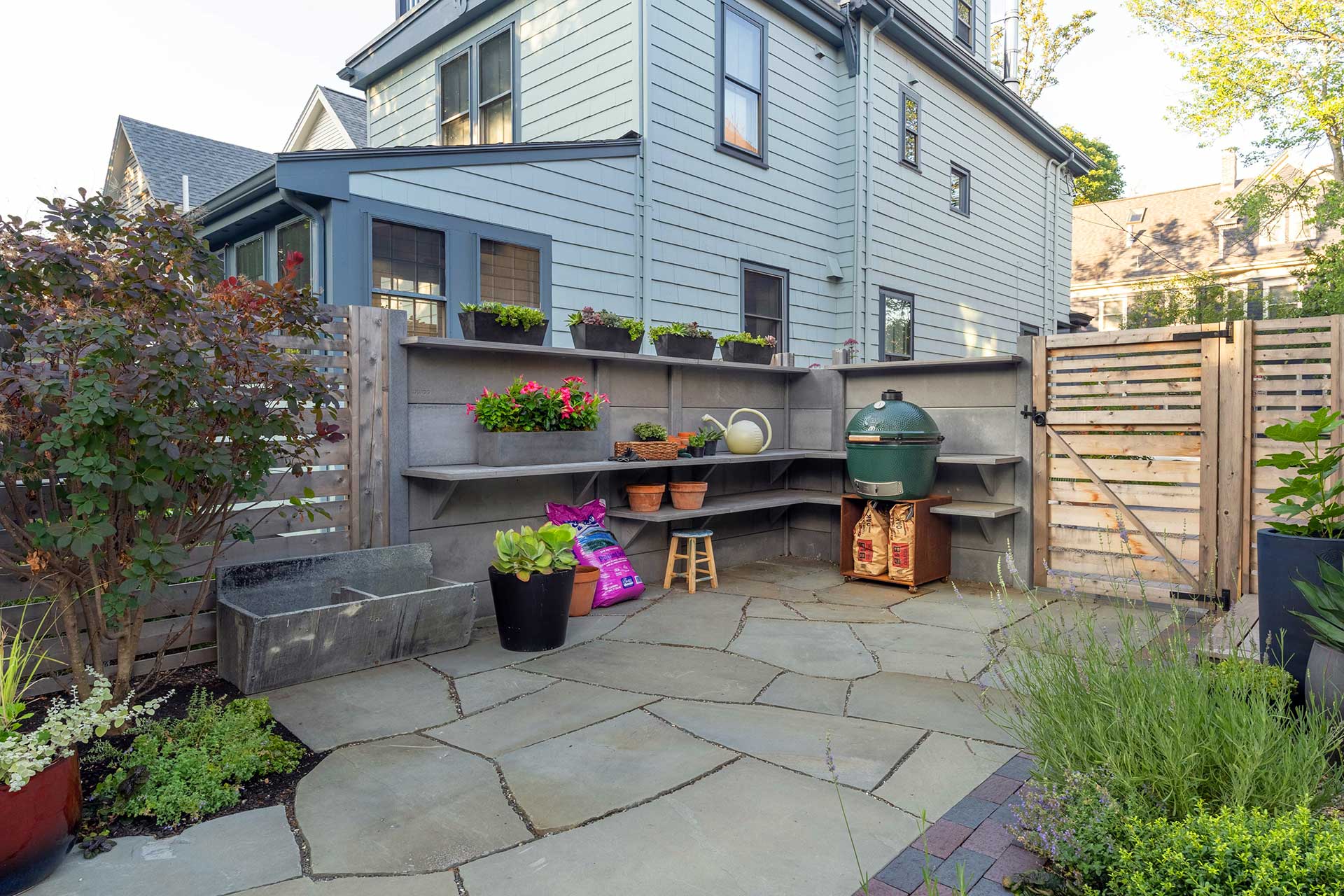
A built-in outdoor prep station integrates cast concrete walls and cedar fencing, forming a defined workspace that supports cooking and entertaining. Photo credit: Dan Kaplan
this property in the news
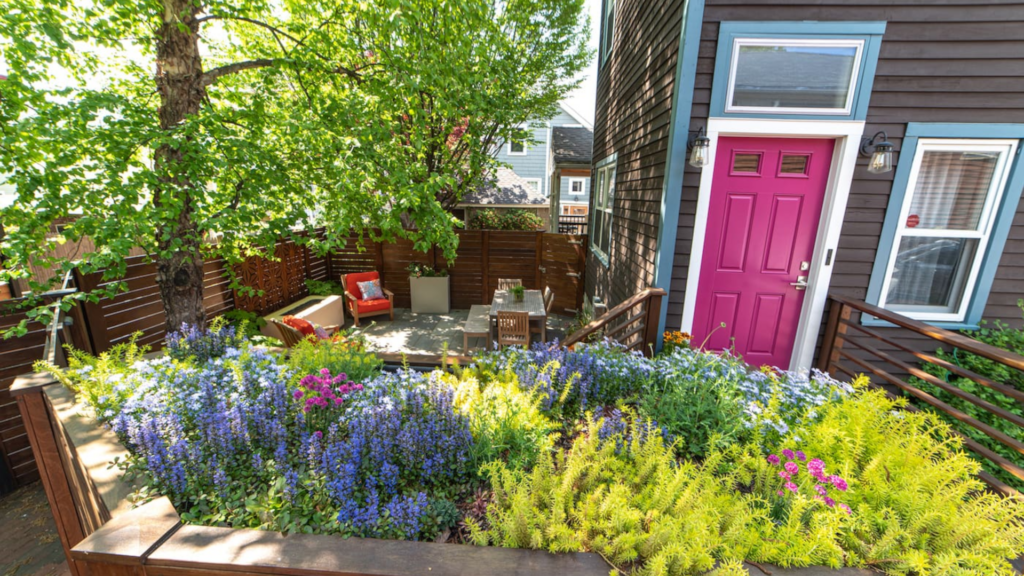
Landscape Design for Compact Spaces | Boston Design Guide
Explore how compact urban yards in the Boston area can be transformed into lush, livable retreats with purpose-driven design. In the blog post at Boston Design Guide, our design veteran Pete Cadieux walks through practical strategies including multi-functional elements, climate-tough plant selections, and integrated lighting, to maximize every square foot. He challenges property owners to view small outdoor spaces not as limitations but as creative opportunities. For premium landscape design and clear visions for tight sites, don’t miss this piece from our friends at BDG.
explore our other featured properties
ready to feature your property?
If you are considering a landscape transformation in Cambridge, Somerville, or the surrounding Greater Boston area, our team would be glad to help you explore what is possible. Contact us today.